

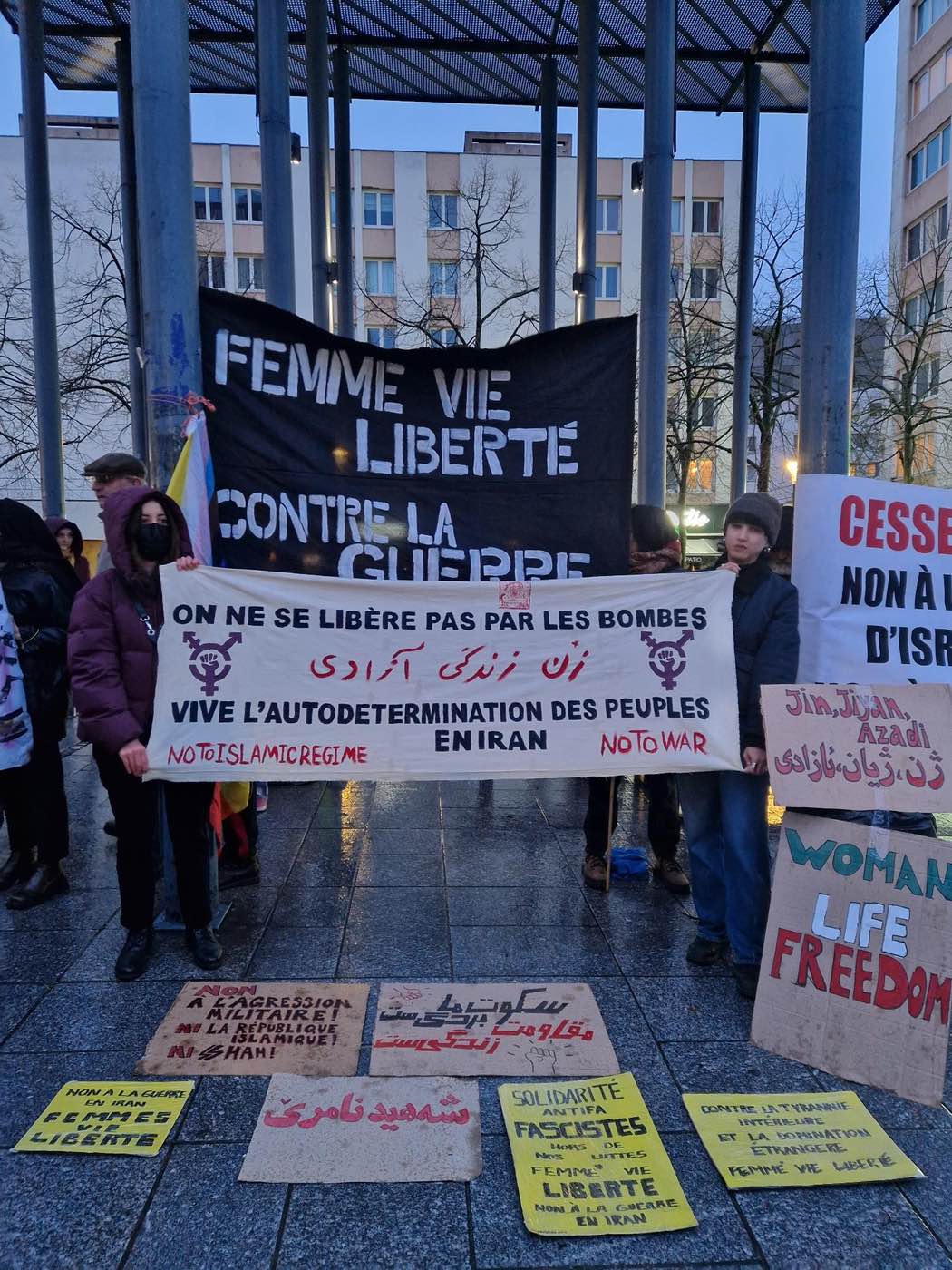
In the following analysis, Somayeh Rostampour shows how the repression that the Iranian government has carried out to crush protests, the monarchist attempt to co-opt opposition movements and push them to the right, and the military assault that the US and Israel are currently carrying out against Iran are all different fronts within a single counterrevolution, reinforcing each other and combining to suppress the possibility of real liberation.
Somayeh Rostampour is a Kurdish feminist activist from Iran who participates in an internationalist network and a feminist, anti-imperialist, leftist collective in Paris, founded in 2022 by exiled activists from Iran, Afghanistan, and Kurdistan after the Jin, Jiyan, Azadî uprising. The collective supports subaltern struggles in Iran.
Between Repression and War
In 2024, Donald Trump participates in rallies featuring slogans such as “be ungovernable” and “mass deportation now.” If fascists are our sworn enemies, it’s not just because their project is the opposite of ours. They’re our sworn enemies because they defend their project in revolutionary disguise, feeding off the impulses and aspirations of popular revolt while being the last resort of the centers. Putin, Meloni, Le Pen, like so many others, take advantage of the frustration and humiliation of the working class, undermined by the latest changes in capital, to consolidate their anti-establishment stance, so as to better defend the system. They claim to want to change everything so that nothing changes. Today, reactionaries are becoming more radical, while progressives flounder in moderation.
—Revolutions of Our Times: An Internationalist Manifesto, The Peoples Want
In late 2025, against a backdrop of economic crisis and a growing rejection of the theocratic regime, a new popular uprising erupted in Iran, rooted in the cycles of revolt that had preceded it. Since 2017, a combination of economic, social, ecological, and political crises has radicalized Iranian society beyond any reformist horizon.
Over the past decade, Iran has experienced at least five nationwide uprisings and thousands of mass protests. Rising unemployment, inflation, poverty, and inequality have made the country fertile ground for popular mobilizations from general strikes to social revolts. These recurring crises have fueled deep discontent, especially among the working class, students, retirees, and unemployed youth, who have repeatedly taken to the streets to denounce these injustices. The lack of freedom and prospects—particularly for a generation facing unemployment rates close to 50 percent—has been one of the central catalysts of the uprisings. When 80 percent of workers survive on temporary contracts lasting less than six months, when retirees and public-sector employees often earn the equivalent of just 100 dollars a month, even as rents in Tehran reach levels comparable to those in European cities, it is hardly surprising that Iran has become one of the most turbulent and contentious countries in the West Asia.
Acknowledging these structural factors does not mean reducing these uprisings to mere economic revolts. That analysis, advanced by certain campist (which is to say, selectively “anti-imperialist”) currents, is both misleading and politically conservative: it frames popular revolt solely as a reaction to hardship while obscuring the ways that protesters intentionally choose to oppose authoritarianism, patriarchy, and the regime. By externalizing the cause of the crisis and centering sanctions or imperial aggression over the regime’s own forms of domination and repression, this normalizes and excuses the Islamic Republic.
These mobilizations are profoundly political in both form and content. They challenge not only inequality and impoverishment, but the entire architecture of rule: authoritarian state power, gendered coercion, the denial of freedoms, the closure of democratic horizons. In addition to the demand for better conditions, they express a refusal of the order that produces those conditions, hence their recurring tendency to take the form of an open demand for the overthrow of the regime.
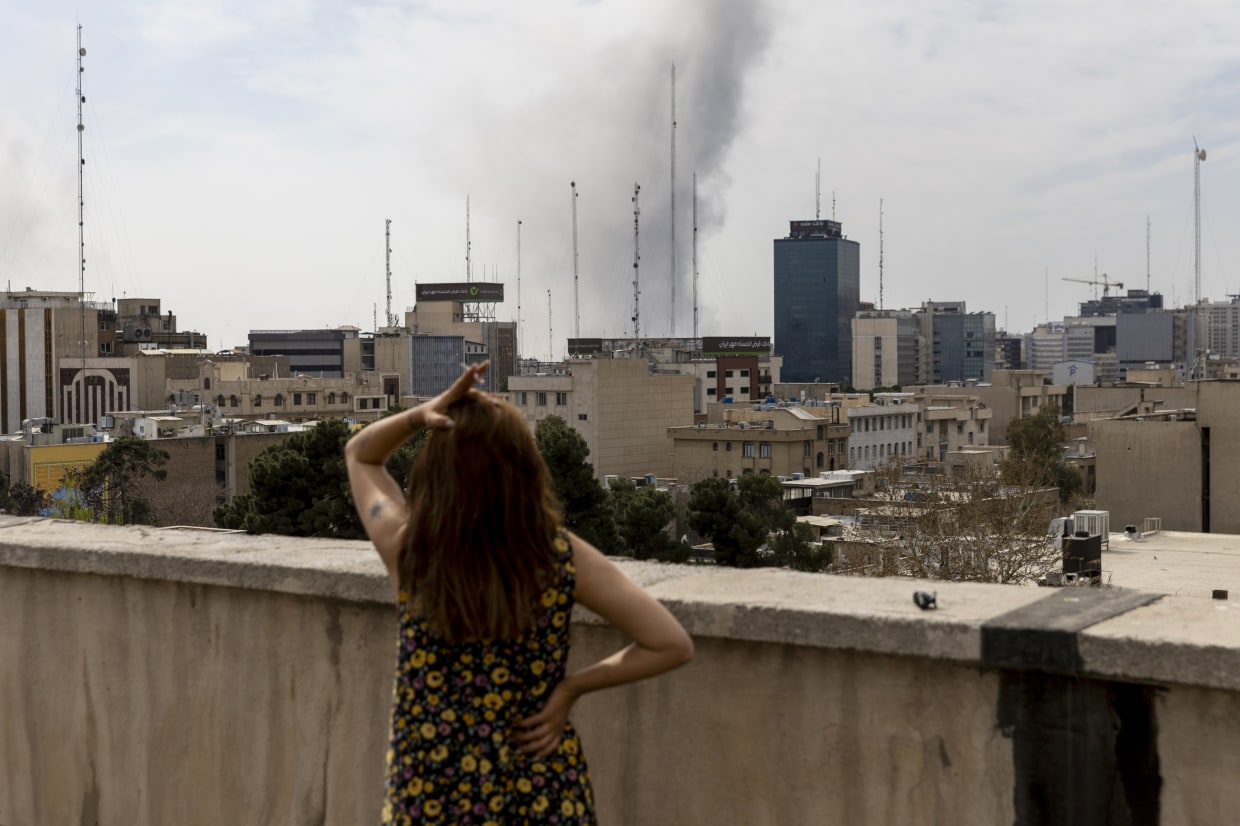
In each cycle of protest, repression has transformed social anger into direct opposition to the regime itself. The January 2025–2026 uprising, which was broader than the previous ones, began in the Tehran bazaar and rapidly spread to students, the urban poor, workers, small shopkeepers, and marginalized peripheries, eventually reaching more than 210 cities across 31 provinces. The regime responded to popular anger with violence unprecedented in modern Iran, shutting down telephone networks and the internet and reasserting control through a repressive apparatus strengthened by authoritarian surveillance technologies and digital-control models associated with its allies, China and Russia. The regime killed thousands of people in the span of a few nights.
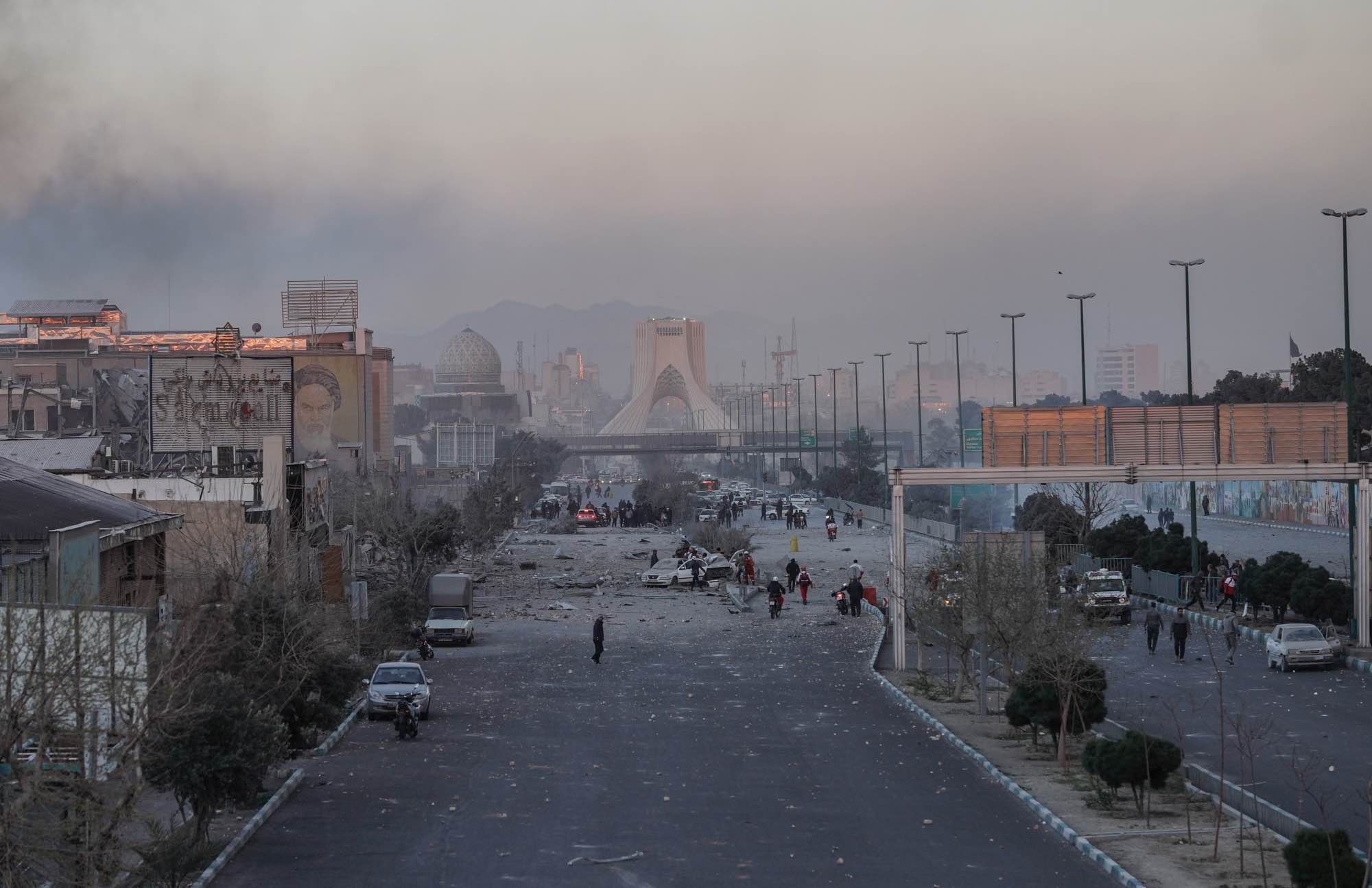
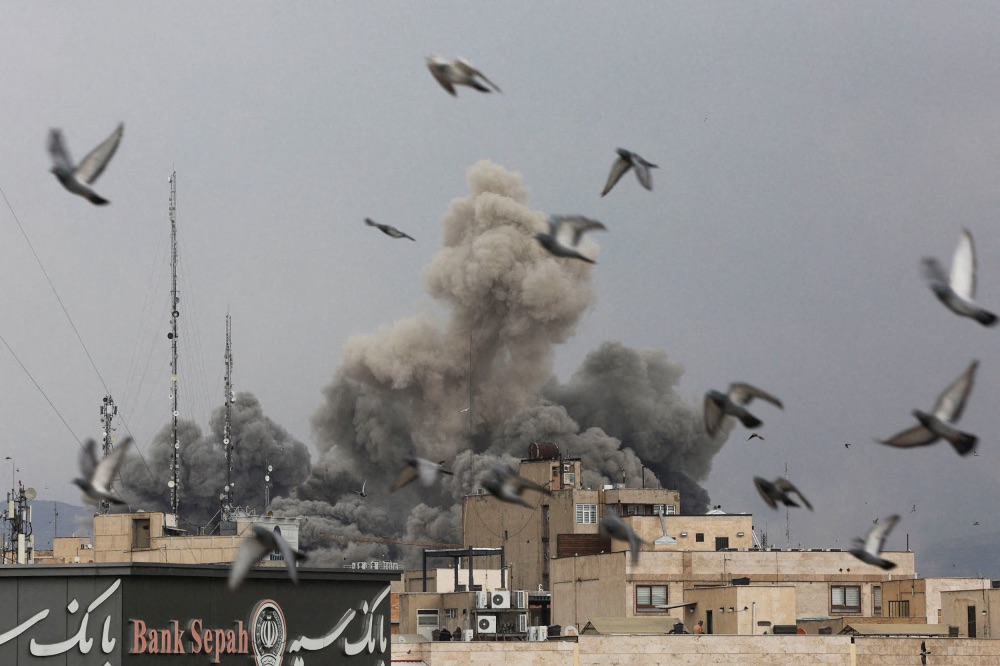
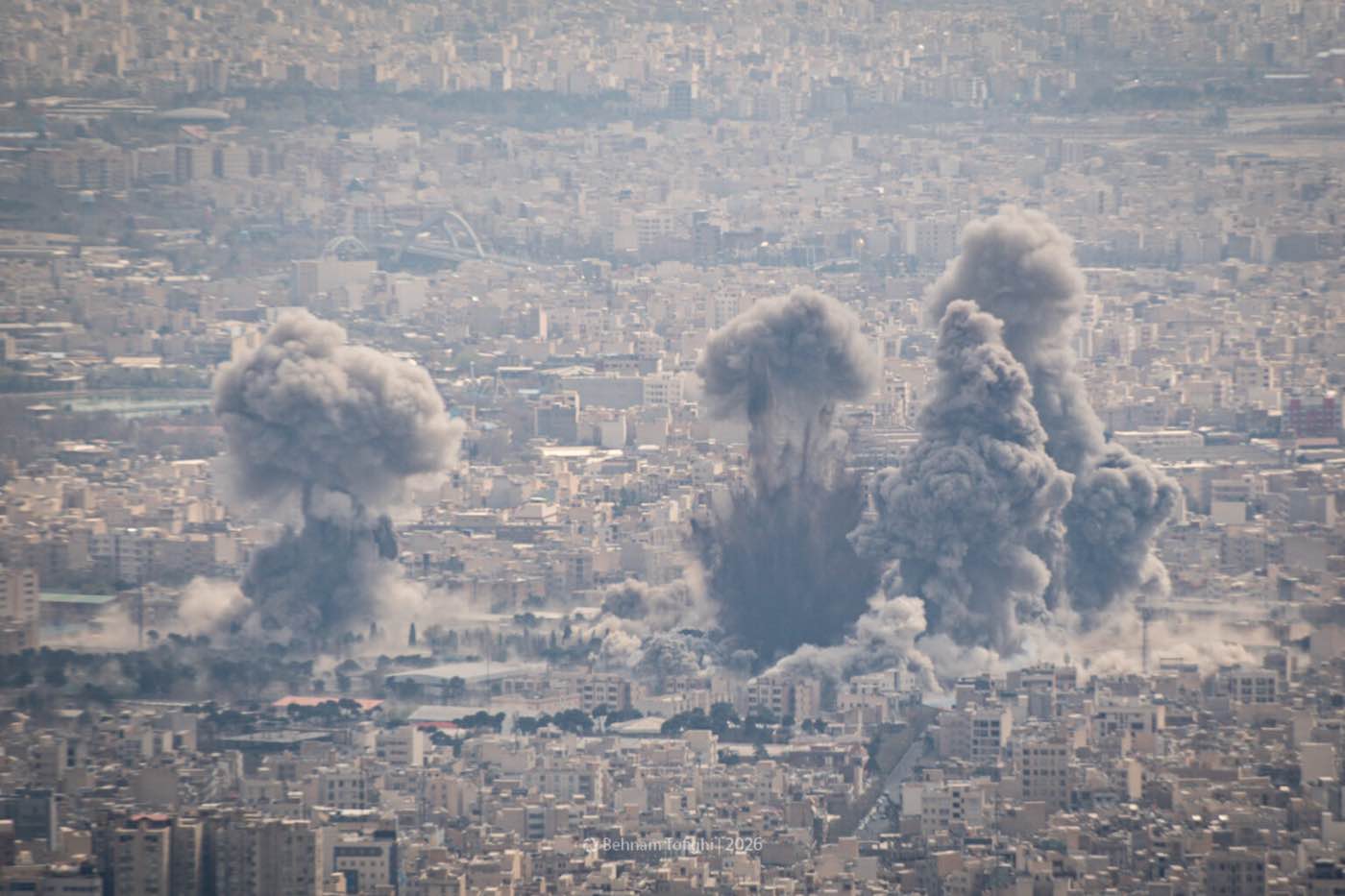
Six weeks later, on February 28, 2026, a US–Israeli coalition launched an aerial assault on the country. Ali Khamenei, the Supreme Leader, was killed in the bombing of his compound by actors who are themselves genocidal. Yet well after the confirmation of his death, Tehran launched barrages of missiles at Israel, suggesting that its chain of command remained operational even in the absence of its highest authority. Iran also expanded its attacks to other countries, particularly Gulf states hosting US military bases, including Qatar, the United Arab Emirates, Saudi Arabia, and Kuwait.
This sequence of events raises an urgent question: in the aftermath of a revolutionary moment in 2022, how is it that the horizon of emancipation could be closed off in favor of a return to authoritarian order in 2026? We must explore how this is taking place not only as a consequence of state repression, but also via a more diffuse counterrevolution advanced by media narratives and new political alliances, cloaked in the rhetoric of “liberation.”
Understanding contemporary Iran requires more than an analysis of revolution—it also demands an analysis of counterrevolution. It is not enough to examine uprisings; one must also grasp the forces that seek to neutralize them, redirect them, hollow them out, or steer them toward an authoritarian outcome.
The Islamic Republic’s repression of the January 2026 uprising and the US–Israeli military assault that began on February 28, 2026 are neither two separate events nor two opposing forms of violence, one “bad” and the other “liberating.” They must instead be understood as part of a single counterrevolutionary process, one that began well before it escalated to military action.
Before the internal massacre and before the external war, an earlier phase had already opened: a political, media, and symbolic counterrevolution, driven in particular by the Iranian nationalist and monarchist right (especially within the diaspora), which sought to neutralize, distort, and appropriate the meaning of the slogan Jin, Jiyan, Azadî [“Women, Life, Freedom”] in order to reinscribe it within a chauvinist, authoritarian, anti-left, and ultimately militaristic agenda. Although the revolution that began in 2022 had profoundly eroded the legitimacy of the Islamic Republic, the regime was able to restabilize itself after October 7, 2023 and, more decisively, after the first US–Israeli attack in June 2025.
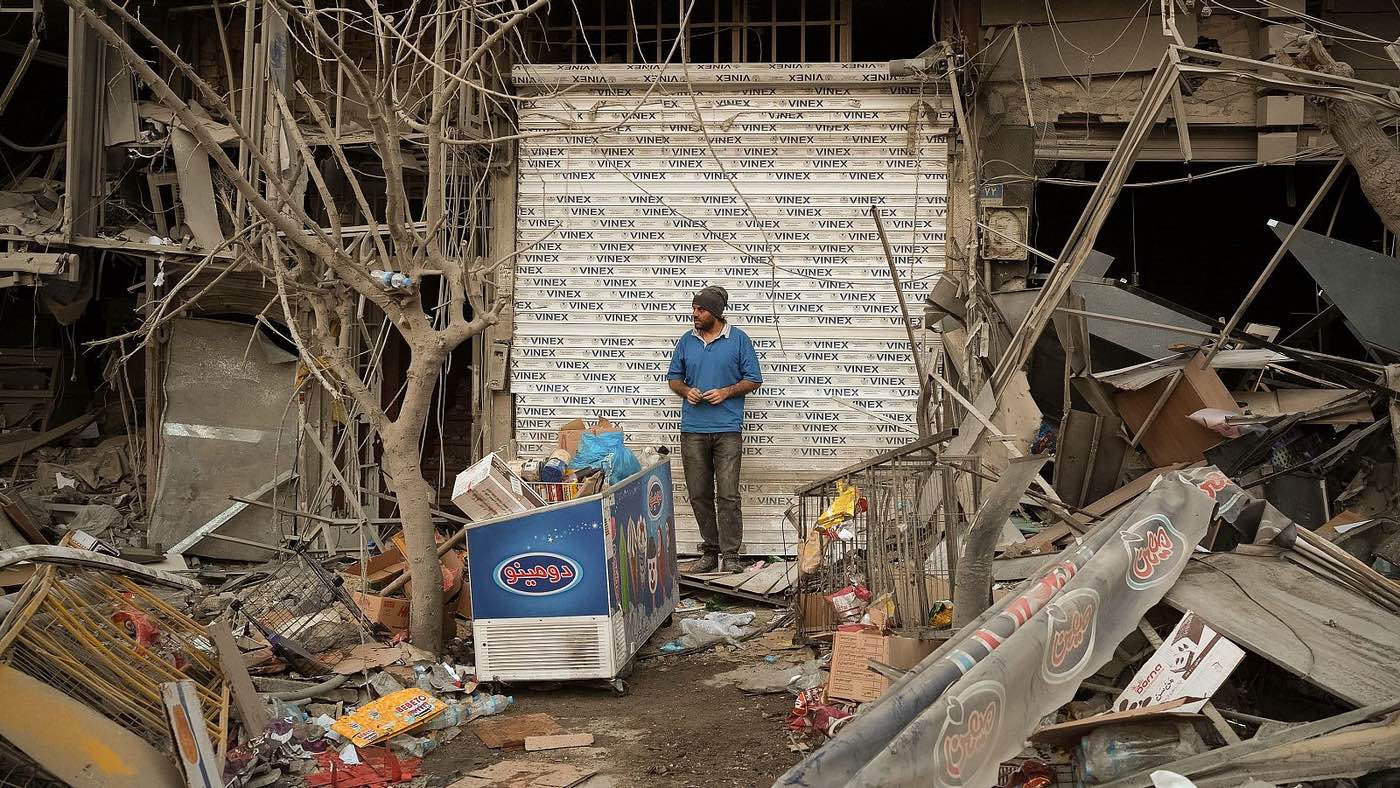
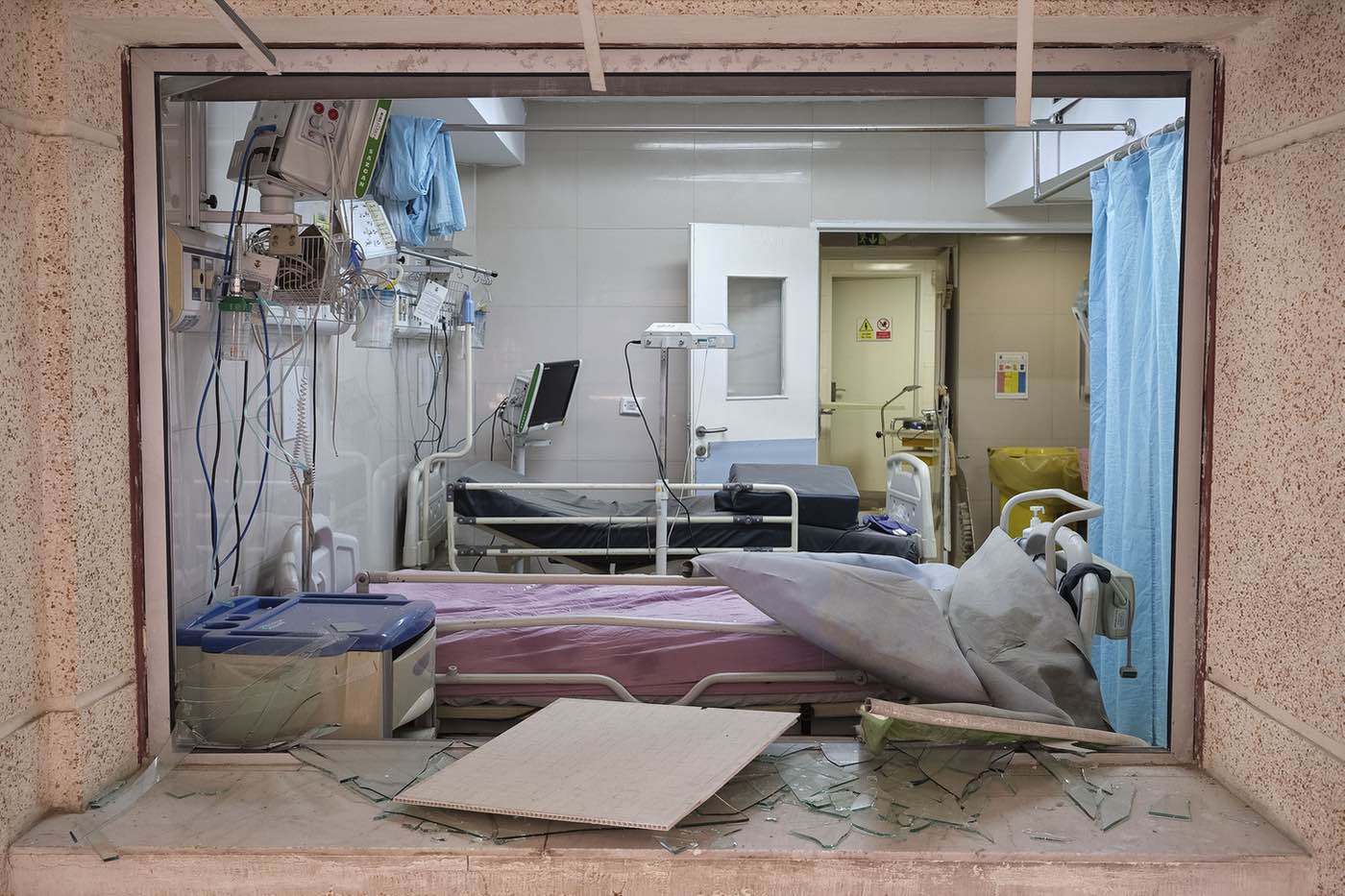
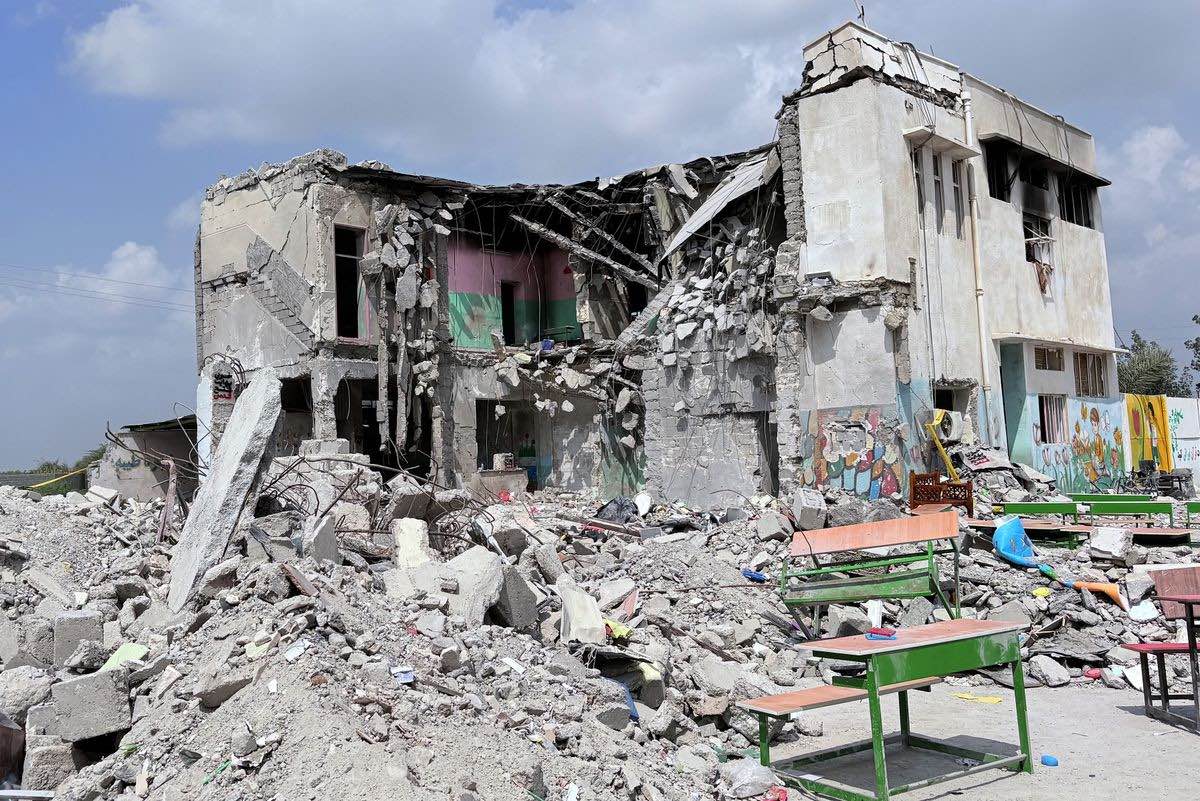
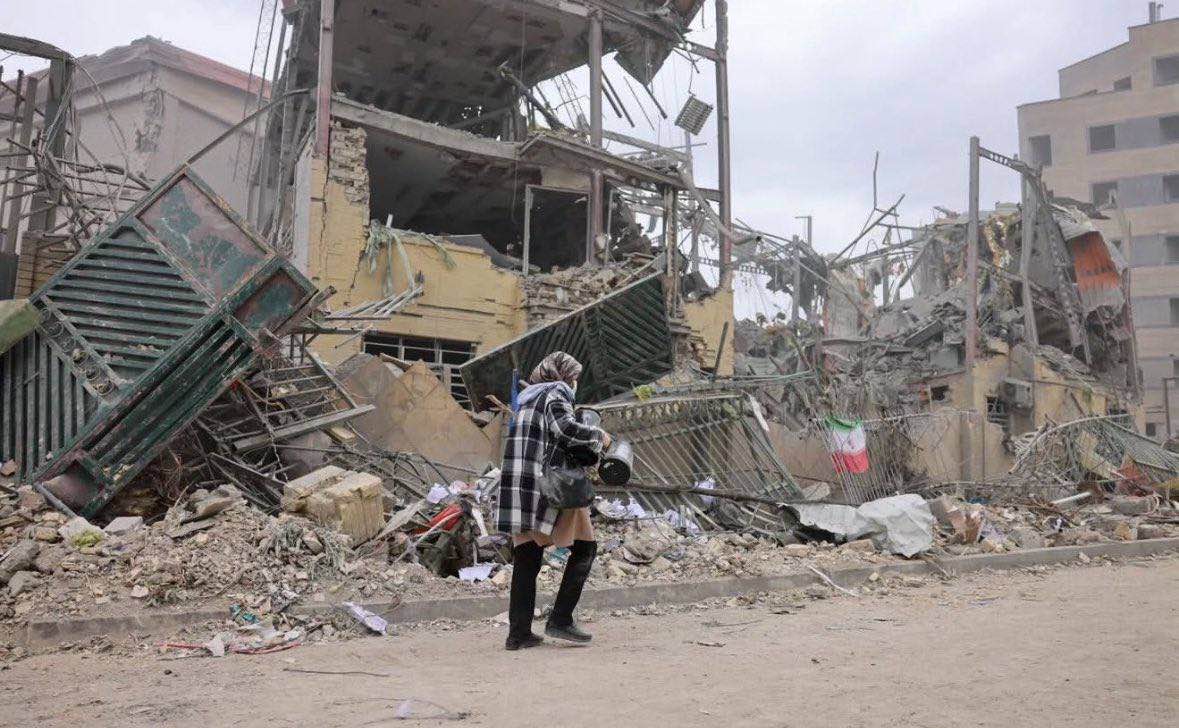
That renewed legitimacy was severely shaken by the January 2026 massacre. Yet only weeks later, a new assault by settler-colonial Israel and the imperial United States deepened the counterrevolutionary sequence, targeting Iran with the same machinery of violence already unleashed on Gaza and Lebanon and other parts of West Asia. Waged on false pretexts, this war has already destroyed schools and hospitals and killed hundreds of civilians in Iran. Despite the devastation, it has also restored a measure of legitimacy to the regime, particularly internationally and among sections of the global left. At times, that left has assigned greater weight to the massacre of Iranians by imperialist arms than to the massacre of Iranians by the regime’s bullets.
As Supreme Leader Ruhollah Khomeini repeatedly insisted during the Iran-Iraq War (1980-1988), “War is a blessing for the Islamic Republique of Iran.” It functions to impose cohesion, silence internal dissent, and renew the regime’s legitimacy.
So the 2026 war on Iran must be not understood as a rupture with the counterrevolution, but rather as its military fulfillment. Rather than precipitating the regime’s collapse, the war will likely only reinforce state nationalism and shut down the possibility of autonomous popular transformation. Even if the regime collapses, what comes next will be more reactionary as a consequence of this war.
The war has already strengthened ethnonationalism and internal political cohesion. We can see this in the confirmation of Mojtaba Khamenei as the new Supreme Leader. Internal repression and external war reinforce one another. Under such conditions, civil society is hollowed out, opposition is stigmatized, and any path out of the crisis becomes more difficult.
Understood in this way, the January massacre and the February war appear not as two ruptures, but as two asymmetric phases of the same armed counterrevolution—internal, through the Iranian state, and external, through imperialist powers—following the royalist attempt to push popular mobilizations to the right. In all three cases, what is being targeted is not just a regime or a population, but the very possibility of emancipatory transformation from below.
From the Jin, Jiyan, Azadi Revolution to the Counterrevolution of 2026
To understand the sequence that runs from 2022 to 2026—without tracing it back to decisive historical events such as the 1953 coup, the White Revolution of 1963, or the Islamic Revolution of 1979—we must recognize that the counterrevolution did not begin with the January massacre, nor with the war that started in February, but earlier, in the political, media, and symbolic spheres. The Jin, Jiyan, Azadî uprising didn’t just challenge compulsory veiling or denounce a state killing; it opened up a feminist, popular, and decolonial revolutionary horizon, making conceivable a transformation from below, driven by women, by marginalized peripheral peoples (especially Kurds and Baluchis), by youth, workers, and neglected regions. It also destabilized both monarchist and reformist narratives by exposing the ways that gender domination, class relations, and the state’s “internal colonialism” are all intertwined.
It was precisely this horizon that became the target of the initial counterrevolutionary offensive, led not only by the regime but also by elements of the opposition, especially nationalist and monarchist circles in the diaspora. These forces sought to empty the slogan Jin, Jiyan, Azadî of its substance, replacing it with formulas such as “Man, Homeland, Prosperity” and rebranding it within a masculinist, centralizing, anti-left, and pro-war grammar. This inversion went so far as to make Jin, Jiyan, Azadî appear compatible with colonial violence—for example, when it was displayed alongside Israeli flags and inscribed on the ruins of Gaza to justify genocide.
In 2023, Iranian right-wing leaders gathered at Georgetown University in the name of unity to discuss a post-Jina Iran. Although this attempt to establish an alliance ultimately failed, it deepened existing fractures and contributed to the withdrawal of progressive forces, in direct contrast to the solidarities that had been forged in 2022. The participants systematically attempted to discredit the uprising’s vanguard forces: they insulted critical feminists, vilified students with the label “Mojahedin” (a reference to the People’s Mojahedin Organization), accused Kurds and Baluchis of “separatism,” and reduced any demand for autonomy or pluralism to a threat against “territorial integrity.”
Their orientation towards Nowruz (the Kurdish New Year celebration) crystallized this logic. Segments of the central elites and right-wing nationalists both framed this expression of popular culture as a separatist threat. An open letter to the state signed by 800 intellectuals from the “center” (politically, geographically, linguistically, and ethnically speaking), most of them Iranian republicans, offered a paradigmatic expression of this tendency. Three consequences ensued: the further exclusion of ethno-national groups, growing distrust toward the “center” (including its patriotic left), and reduced participation of these demographics in the 2026 uprising. At the same time, the left—already weakened as a force sustaining the horizon that had opened up in 2022—was becoming even more fragmented.
The consequences of the reversal of the meaning of Jin, Jiyan, Azadî became evident in certain leftist circles, where people pathologized the agency of oppressed nations, particularly the Kurds. Much like the misogynistic logic that blames survivors of sexual assault for “provocative clothing,” some leftist analyses implicitly framed Kurdish or Baloch mobilization as a provocation that invited state violence or foreign intervention. This is both ethically and theoretically unsound, as it abstracts struggle from its material context, displaces the responsibility for suffering from the structures of domination to those who resist them, and inadvertently aligns itself with the very forces it claims to oppose. In this climate, even the memory of the Jin, Jiyan, Azadî uprising became a battleground. Its radical promise was gradually replaced by a hegemonic order organized around militarized normalcy.
Meanwhile, the Israeli offensive and the propaganda disseminated by right-wing and far-right media outlets such as Manoto and Iran International helped neutralize the radical promise of Jin, Jiyan, Azadî, suppressing its challenge to ethnic hierarchies and its redefinition of sovereignty as a common good in order to promote a racialized, centralizing, and militarized order.
Geopolitical realignments accelerated this shift. The “Twelve-Day War” Israel waged against Iran in June 2025 reinforced both nationalism and the state’s racializing power by making it easier to cast participants in the uprising (especially Kurds and Baluchis) as “separatists.” Gradually, the pluralist aspirations of 2022 gave way to a logic of security, exclusion, and discipline. Some former “patriots” helped legitimize state power as a “bulwark” against the external enemy; nationalism hardened, entrenching ethnic and gender hierarchies and lowering the political cost of Persian-centric and xenophobic discourse. The state campaign against Afghan migrants (including the forced expulsion of more than two million people) was supported both by regime proxies and by monarchist and nationalists, further normalizing racism within the social sphere. In this climate, the summary executions of Kurds and Afghans accused of spying for Israel met with little opposition.
The production of Afghanophobia and Kurdophobia was not incidental. It was integral to the post-uprising order.
This became especially clear in the case of the alliance of five Kurdish parties that was announced on February 22, 2026, which linked the fall of the regime to Kurdistan’s right to self-determination within a democratic Iran while foregrounding the values of democracy, women’s rights, ecology, and equality. The alliance was immediately branded “separatist” by both the monarchist “crown prince” Reza Pahlavi and the Islamic Republic’s media platforms. The former invoked a “national duty” to defend “territorial integrity,” while the latter portrayed the alliance as “one component of a US–Israeli project.” A segment of the republicans in the Iranian opposition (mainly liberals from former reformist currents) likewise defends the idea of a secular and democratic state grounded in centralizing nationalism.
Thus, a common thread runs through otherwise opposed camps: opposition to autonomy for oppressed peoples. This fault line reveals who adheres to the principles of the 2022 uprising and who does not.
Within this polarization, the opposition has increasingly been structured around two blocs: on one side, the revolutionary horizon that opened in 2022 around Jin, Jiyan, Azadî, which seeks to transform relations of power and national and gender identities from below; on the other side, a right-wing—indeed, at times, far-right—counterrevolutionary bloc led by Pahlavism (monarchists) but extending beyond it, combining centralizing statism with militarism and oriented toward restoring the old order. These are the ones in the diaspora who danced and celebrated the war in the streets of the West while imperialist bombs rained down on the people of Iran and their homes.
Reza Pahlavi previously had only a limited base and lacked a solid organizational apparatus, but he seized the window of opportunity that opened after 2022. By adopting a nationalist and anti-left line, he drew together segments of the opposition that were hostile to the leading role of women, Kurds, Baluchis, and workers, while also capturing a desire for a “rapid overthrow” backed by the West. His earlier attempts to align himself with a Revolutionary Guards–reformist axis had failed, but especially after October 7, 2023, he benefited from the support of an actor that may be small but is nonetheless powerful. Namely, Israel.
The nationalist, sexist, homophobic, racist, and anti-left slogans that emerged in 2026, both in the streets and at universities, belong to a counterrevolutionary backlash. This is an anti-left counter-offensive fueled by fear of the power of marginalized groups—the vanguards of 2022—and of those who supported them, but also by political exhaustion and a sense of helplessness in the face of the regime’s resilience. The perceived failures of earlier strategies helped to legitimize the transfer of initiative to reactionary forces, including through war if necessary.
In fact, these formations, whether state-led or oppositional, are not just reactionary—they are also parasitic. They feed on the creative energy of uprisings only to neutralize and redirect it toward nationalist or imperial ends. This is visible not only in Israel’s disingenuous portrayal of war as “liberation,” but also in the way that the right wing of the Iranian diaspora pursues Western recognition through the erasure of the uprising’s feminist, Kurdish, and queer dimensions. These actors aim to appropriate the insurgent force that Jin, Jiyan, Azadî unleashed, even as they work to foreclose its return in emancipatory form. The parallels with other feminist uprisings, such as Ni Una Menos (“Not One More”) in Latin America, are striking. In both cases, radical visions of gender justice and collective refusal encountered carceral, military, and ideological backlash. What emerges across these contexts is what Verónica Gago describes as a global architecture of backlash: protesters are criminalized, repressive technologies circulate transnationally, and war becomes a means of disciplining political desire.
The regime’s internal repression and the external war merely completed by force of arms a counterrevolutionary process that was already well underway. From this perspective, the recent war appears as the final phase of that process: not as a means of “liberating Iran,” but as an effort to annihilate the last remnants of the momentum unleashed in 2022 and to impose a regime change orchestrated from outside. In other words, the bombings are aimed not at emancipation, but at mobilizing counterrevolutionary forces for a new regional and global order—at the cost of massive destruction, civilian deaths, and the long-term foreclosure of the possibility of popular transformation for generations to come.
The Demonization of the Left: A Gateway to the Far Right
The repression that the regime carried out was only the first phase in the counterrevolution. One must also understand how “the left” was constructed as an all-encompassing category of the enemy. In this operation, everything that defends equality, autonomy, linguistic and political plurality, women’s rights, self-determination, the emancipation of oppressed peoples, or social justice is reduced to “the left” and framed as an existential threat.
The regime does this. The monarchists also do this. And so do certain Iranian reformists or republicans, if in subtler ways.
This demonization of the left has paved the way for the rise of the far right. It is not new, moreover. Under the Pahlavis (1919–1980), left-wing forces were already associated with chaos, subversion, foreign dependence, or hostility to development.1 After 1979, the Islamic Republic extended and radicalized this logic, carrying out the elimination of independent left groups; executions (to which the mass graves of Khavaran still bear witness); purges; repression in Kurdistan in the name of “jihad” against the Kurds; and the criminalization of activists under labels such as “communist,” “atheist,” “Westernized,” or “counterrevolutionary,” all while paradoxically appropriating certain language about social justice, anti-imperialism, and the Palestinian cause.
State “anti-imperialism” does not continue a tradition of emancipation or anti-colonial struggle. It appropriates the simulacrum of that struggle as a way to justify internal violence, criminalize opposition, present an authoritarian order as a posture of resistance, and legitimize gender apartheid in the name of “cultural authenticity”—a façade intended to distinguish it from the West. This extractive and dishonest appropriatiion, which may at first glance evoke models such as Stalinism or Nasserism, took on a specific form in Iran. Emancipatory concepts were reframed in a religious and mystical language, while state anti-imperialism was reconfigured as a “civilizational” opposition to the West. The left thus became an enemy both because of its secularism and because of its capacity to challenge the regime’s monopoly on the language of social justice and the question of Palestine.
Iran presented itself as the core of the “Axis of Resistance” on the international stage for its own benefit while maintaining a tyrannical order at home. This opened the way for the consolidation of a patriarchal Islamist order. In this way, a discourse of liberation was inverted into a discourse of domination, suppressing women’s autonomy and criminalizing democratic opposition.
Reformism—the only current emerging from the authorized political parties that has consistently shared power with the Islamists in Iran, including seventeen years holding the presidency—also played a decisive role in this demonization by spreading a more diffuse anti-left critique through journals, editorials, and various cultural productions. In the name of stability, moderation, and development, they associated the left with irrationality, dogmatism, violence, or foreign dependence, while minimizing the US-backed coup of 1953 and the repression of progressive forces after 1979.
At the same time, reformist discourse often functioned to delegitimize the poor and the working class by portraying them as the social base of religious conservatism, or even as a politically ignorant mass available for authoritarian capture. Socio-economic revolts were framed as the expression of the supposed “nature” of the poor, a framing that we saw again during the uprisings of 2017–2018 and more recent mobilizations.2 In periods of crisis, some reformists even adopted rhetoric focused on “security,” describing protesters as “terrorists” and seeking to neutralize radical demands by spreading fear.
Presented after the Iran-Iraq War (1980–1988) as a path of gradual change “from within”—through electoral participation, parliamentary action, and the formula of “pressure from below, negotiation from above”—reformism has consistently confined the political field to the twin alternatives of reform or collapse. This framing delegitimized any emancipatory rupture by associating it with Syrianization, extremism, and the betrayal of the national interest. After nearly two decades of experience, reformists came to appear less as an alternative to the regime than as one of the mechanisms of its reproduction. The slogan of 2017–2018—“Reformists, conservatives, the game is over for both of you”—articulates this eloquently enough.
Yet despite its crisis of legitimacy, the reformist current continues to reproduce itself, both in Iran and in the diaspora, particularly among certain nationalist elites and sometimes also in campist circles. For example, Fariba Adelkhah, a French-Iranian anthropologist and academic at the French university Sciences Po who was detained in Iran from 2019 until 2023, published a text on January 14, 2026—just days after the bloody massacres of January 8 and 9—that fits squarely within a diasporic reformism which, under the guise of methodological caution, reproduces a framing that is hostile to the left and to the fall of the regime.3 According to reformist thinking, some form of internal mediation within the regime—allowing people to “debate without resorting to violence,” in Adelkhah’s words—might still be possible, despite the manifest collapse of that perspective in the slogans, practices, and forms of politicization that have shaped the recent uprisings. By rejecting any non-reformist alternative and converging with campism in the name of anti-interference, reformism has indirectly helped rehabilitate monarchism.
The fact that certain campist decolonial or pseudo-anti-imperialist figures have spread their reading of Adelkhah in France reveals the proximity between campist talking points and counterrevolutionary Iranian reformist positions. In the name of caution and anti-interference, these positions tend to direct conversation away from repression, delegitimizing popular uprisings and providing an indirect justification for the violence that authoritarian postcolonial states exercise. Campist currents that reduce every Iranian crisis to a consequence of sanctions or Western interference end up whitewashing the Iranian regime. By subordinating struggles over class, gender, and liberation to an abstract geopolitics, this helps to empty the very idea of emancipation of its concrete content, leaving the right with a monopoly on radical critique of the existing order.
When one refuses to think through the internal war the regime has waged against its own people, any denunciation of external war remains politically incomplete. This was the logic that led certain decolonial campist currents to insult the revolutionary Jina uprising in 2022 by branding it “Woman, Life, Zionist,” as Paroles d’Honneur (PDH) did in France. The result is the same: the closure of the revolutionary horizon opened in 2022, the isolation of popular forces and leftists, and the displacement of the desire for rupture in favor of reactionary solutions.
From this reformist and campist perspective, any emancipatory project that departs from Realpolitik is recast as “radicalism” and pushed outside the bounds of legitimate politics. This strategy of disqualification has left the right with a monopoly on radicalism; consequently, these two currents become, if not allies, at least accomplices in the rise of the royalists, whose diasporic branch today represents a form of the far right.
Within the diaspora, monarchists have systematized and intensified the demonization of the left. With the backing of international powers and Israel, and with considerable financial and media resources at their disposal, they rewrite history by reducing Iran’s crises to the fitna (“sedition”) of 1979 and the “betrayal of the left.” They use the errors of part of the left, such as the Tudeh Party’s support for the Islamic Republic in the name of anti-imperialism, as a pretext for this, equating the left with the Islamic Republic, much as the Russian left has historically been associated with Stalinism.4 As a label, “the left” thus becomes a smear, an instrument of exclusion targeting anyone who opposes Pahlavism—including human rights activists, republicans, liberals, and even political prisoners such as Narges Mohammadi, who has never identified as left-wing.
This is a way to depoliticize the responsibility of monarchist structures and the West while channeling social anger towards a counterrevolutionary nostalgia. In this context, campists who support the “Axis of Resistance” through by whitewashing of the regime’s crimes become unwitting auxiliaries of the far right. In insisting that no alternative to monarchism would exist in the event of the regime’s fall, they ultimately conclude that no uprising should take place at all. This opens up space for fascist populism and the far right, especially in the diaspora, while isolating radicals in exile.
Reformists and monarchists, both often situated within a neoliberal horizon and both largely intolerant of ethnonational pluralism, tend to reinforce one another, at times becoming actual allies. The popular phrase “The left never understood,” powerfully revived by both camps shortly before the revolt of 2026, illustrates the effectiveness of anti-left discourse.
A triangular convergence emerges between the Islamic Republic, the reformists, and the monarchists: despite their declared antagonisms, all tend to neutralize emancipatory alternatives emerging from the left, feminism, and oppressed peoples, thereby foreclosing the horizon that opened in 2022 with slogans such as “Neither monarchy nor Supreme Leader: freedom and equality.” The rights of these groups are framed as existential threats to different forms of authoritarianism, whether theocratic, secular-centralist, or monarchic. Designating “the left” as the principal enemy prepares the way for a right-wing counterrevolution, or, if necessary, war.
War as Counterrevolution in the Guise of Liberation
The Islamic Republic’s violent suppression of the Jin, Jiyan, Azadî uprising in 2022 transformed the conditions under which “freedom” itself could be imagined across wide sectors of Iranian society. By refusing popular demands for gender justice, democratic transformation, and ethnonational autonomy, the regime deepened an already severe crisis of legitimacy and fractured what remained of the social contract. The result was not only the collapse of trust between the state and society, but also a weakening of the collective capacity to imagine liberation as an internal political project.
This rupture created a dangerous political terrain. As avenues for reform, recognition, and participation were systematically closed, the idea of freedom became increasingly entangled with hopes for a solution from outside. War, once understood primarily as the destructive antithesis of emancipation, came—in certain quarters, even among some anticolonial thinkers—to be perceived more ambiguously: not as something desirable in and of itself, but as a possible means of dislodging a violently entrenched regime.
This shift should not be mistaken for an endorsement of militarism. Rather, it reveals a profound transformation in political subjectivity—for which the Islamic Republic bears responsibility. Through decades of repression—and especially through its ruthless response to the uprisings of 2022 and January 2026—the regime did not simply foreclose reform; it altered the framework through which violence, rupture, and liberation are understood. In Frames of War, Judith Butler argues that when a state renders sections of the population unrecognizable or disposable, it reshapes the affective and epistemic conditions in which violence is understood. In the Iranian case, this has contributed to a dangerous erosion of the distinction between annihilation and salvation, destruction and deliverance.
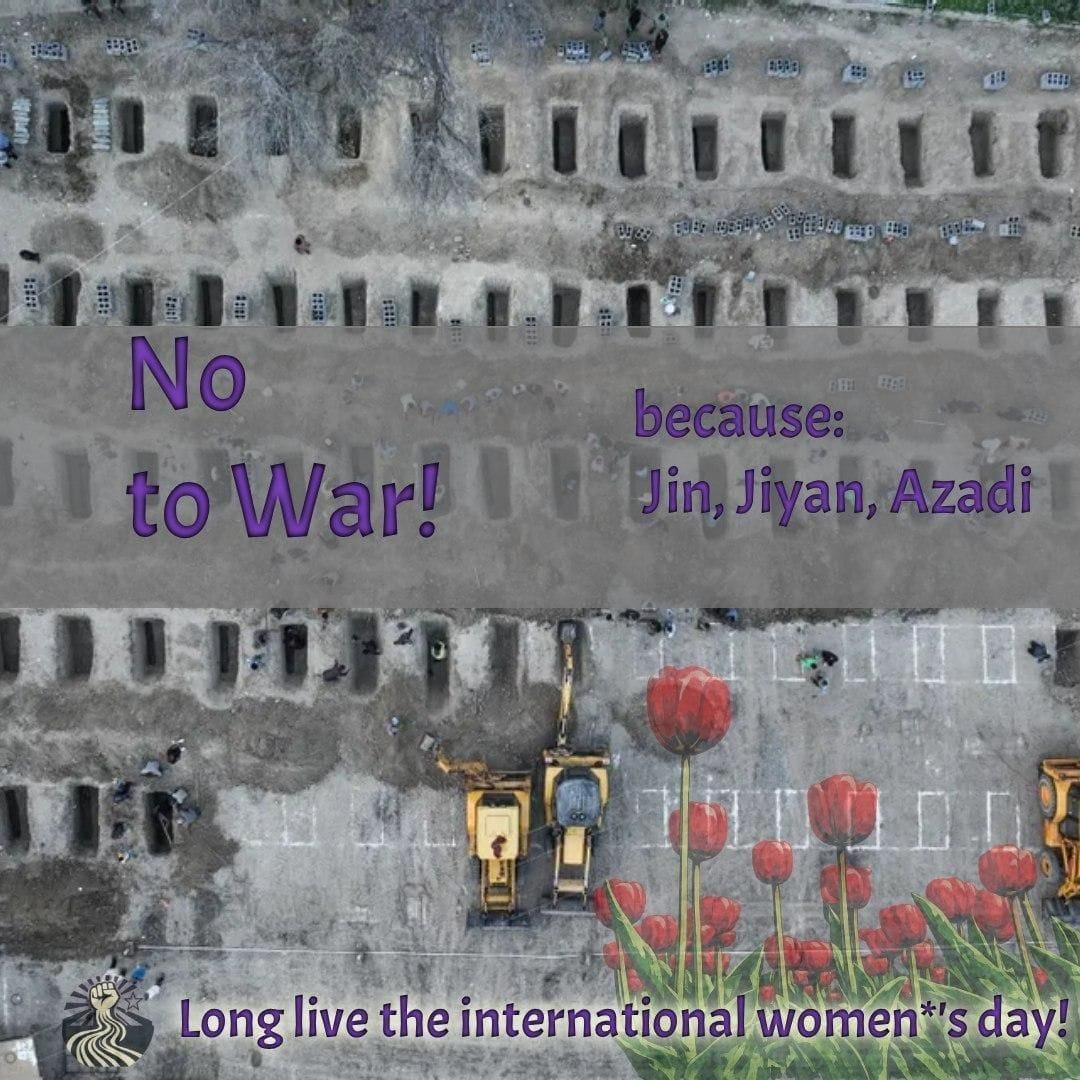
The events of January 8 and 9, 2026 offer an especially stark example of this. During the latest mass revolutionary uprising, the regime enforced a near-total shutdown of internet and telephone communications and sought to restore “order” through a combination of repression, isolation, and terror. In January, a prominent ophthalmologist released a video stating that, in a single hospital (Farabi) in Tehran, one thousand operations had been performed during the night of January 8 alone to treat protesters shot directly in the eye with live ammunition. Hospitals were turned into detention centers rather than places of care, and many of the wounded were transferred to prisons, where some were summarily executed. The bodies of slain protesters were piled into refrigerated trucks; some of them were unrecognizable as a consequence of the brutality that had been inflicted on them. Videos show families in morgues, weeping, searching for their children or trying to identify the bodies of their relatives. Among these images, one can see infants and teenagers killed by gunfire.
Many victims are still missing. According to a report from an Iranian university, at least fifty women were buried anonymously because they could not be identified. Bodies returned to families were sometimes released only in exchange for payment, often on the pretext of a “projectile fee,” or families were forced to declare that their relatives had been members of the Basij [a paramilitary volunteer militia within the Islamic Revolutionary Guard Corps] and had been killed by protesters. Burials, often carried out under intense security pressure, took place in silence, very early in the morning or late at night. In some cases, the bodies were buried without the families even being informed. The figures indicate around 10,000 dead, more than 11,730 cases still under investigation, more than 25,000 injured, more than 52,000 arrests, and at least 337 forced confessions. The regime used violence not only to repress but also to terrorize society.
The stories of death, disappearance, and arrest give concrete meaning to the slogan: “Basij, Sepah, our Daesh, that is you.” [Sepah is a term for the Islamic Revolutionary Guard Corps; Daesh is a term for the Islamic State.]
In the political vacuum produced by this state violence, monarchist and right-wing forces found an opportunity to expand. Pahlavi’s rise did not indicate a mass ideological turn toward monarchism so much as a sign of the growing conviction that no break with the regime could be possible without external intervention. As the figure most visibly associated with international backing—especially Israeli backing—he came to embody, for part of the population, the most credible vehicle for an externally imposed “liberation.” Pahlavi’s appeal stemmed less from a positive desire for monarchical restoration than from the perception that he embodied, in practical terms, a project of regime change through war.
The regime, in turn, responded by intensifying its discourse about “security,” branding protesters “terrorists,” “spies,” and foreign agents, and paving the way for new executions under charges such as moharebeh (“waging war against God”). A vicious circle emerged: repression foreclosed emancipatory possibilities from within, while the vacuum it produced turned people towards reactionary solutions from outside. That was the context in which counterrevolution could be disguised as salvation.
The Israeli-American military escalation against Iran in 2025 and 2026 must be understood in this context. Externally, the war was justified with rhetoric about Iranian “liberation.” This discourse was not merely imposed from outside by imperial force; to the extent that some sectors of Iranian society accepted it, that was the result of the devastation that the regime itself had produced.
The fact that a transparently cynical appropriation of feminist and democratic language by a settler-colonial and apartheid state could appear credible to anyone is itself a measure of the depth of despair in Iran. Netanyahu’s grotesque invocation of “freedom” is a stark example of the imperial co-optation of discourse about liberation. The symbolic hijacking of the emancipatory language of Jin, Jiyan, Azadî was facilitated not only by sections of the Iranian right, but also by certain Western liberal feminists whose selective solidarity with Iranian women remained compatible with silence about genocide, colonial domination, and war in the region.
This is not new. As scholars such as Lila Abu-Lughod and Mahmood Mamdani have shown, imperial powers have repeatedly instrumentalized language about women’s rights, protecting minorities, and democracy to legitimize military intervention—for example, in Iraq and Afghanistan. What is noteworthy here is the extent to which that discourse could resonate in a society damaged by authoritarian rule. Years of repression, ideological coercion, and nationalist consolidation have fractured political consciousness to such a degree that what would ordinarily be recognized as imperial aggression could appear to some as the only imaginable solution. This is the consequence of the systematic destruction of internal political alternatives. The task of analysis is therefore not to pass moral judgments on this perception, but to understand what produced it. What kind of regime drives people to the point where the bombs of an external imperialist aggressor can appear less intolerable than the continuity of domestic domination?
Had the regime responded to Jin, Jiyan, Azadî with the slightest bit of accountability, or opened up even the smallest space for democratic transformation, the narrative of war as salvation would have remained marginal. Instead, the regime criminalized dissent, intensified repression against Kurds, Baloch, women, and other oppositional forces, and framed every demand for justice as foreign infiltration. In doing so, it not only extinguished the conditions of internal change but also prepared the ground for imperial powers to dishonestly present themselves as agents of liberation. Domestic authoritarianism and external militarism do not stand in simple opposition; they are mutually enabling, even if they remain asymmetrical.
It is crucial to emphasize that asymmetry. It is a serious analytical and political mistake to treat Israel and the Islamic Republic as equivalent actors. While enjoying the full support of the United States, Israel remains the principal external aggressor: a settler-colonial state engaged in genocide in Gaza, permanent occupation in the West Bank, and a broader project of militarized regional domination. By contrast, the Islamic Republic is not the architect of this imperial order but one of its targets—even as it remains an authoritarian and patriarchal regime deeply complicit in the militarization of the region through its own expansionist, quasi-imperial ambitions (particularly in Syria, where its intervention contributed to mass atrocities). Israel and Iran are not symmetrical powers, but they are deeply entangled. Each, in its own way, uses war to manage crisis: Israel by turning militarized violence outward, the Islamic Republic by invoking external threats to justify internal repression. In both cases, war functions as a counterrevolutionary force: it disciplines hope, narrows political imagination, and reimposes patriarchal, nationalist, and statist forms of “order” against the plural, feminist, and subaltern horizon opened by Jin, Jiyan, Azadî.
The political challenge, then, is twofold. We must confront imperialism not only as military aggression but also as a discursive project that appropriates the language of freedom in order to destroy emancipatory politics. At the same time, we must dismantle the domestic authoritarian structures that make such imperial appropriations appear plausible. An anti-war politics adequate to the Iranian present must therefore be both anti-imperialist and anti-authoritarian. It must reject the false choice between bombs and massacres, between devastation and prisons, between foreign intervention and domestic repression.
To sustain such a politics means recovering the revolutionary content of Jin, Jiyan, Azadî as a living political horizon. That horizon rejects the reduction of politics to militarism, refuses to let liberation be defined through war, and prevents both imperial powers and nationalist elites from appropriating feminist, Kurdish, and subaltern struggles. The question is not only how to overthrow an authoritarian regime, but how to prevent the fall of today’s order from paving the way for tomorrow’s tyranny. So long as the desire for change remains trapped between domestic authoritarianism and imperial aggression, destruction will masquerade as salvation.
A Final Word
Iran cannot be understood through simplistic binaries—regime versus opposition, war versus peace, reform versus revolution. It is more useful to understand the present moment as a confrontation between two horizons. The first, opened by Jin, Jiyan, Azadî, is an emancipatory horizon grounded in social justice, plurality, and transformation from below. The second is a counterrevolutionary horizon that takes different forms—theocratic, reformist, monarchist, campist, militarized, imperial.
Authoritarianism does not rely on repression alone. It also works by capturing symbols, demonizing left alternatives, fabricating internal enemies, emptying the popular imagination of possibilities, and legitimizing war as a solution to crisis. After the repression of the Jina uprising in 2022, exhaustion and disillusionment—shaped by the memory of 2009, 2017, and 2019—enabled both the Islamic Republic and sections of the exiled opposition to reassert statist logics, whether theocratic or nationalist, and to contain the revolutionary opening within familiar discourse about security, masculinity, and ethnonationalism.
Yet the violence of the counterrevolution also revealed the force of the uprising that it sought to crush. As the Peoples Want Internationalist Manifesto puts it, “Behind every fascism lies a failed revolution.” Israel’s attack on Iran, together with the limited support it has received from parts of the Iranian opposition, must be understood as a reactionary response to an aborted revolutionary process. The repression of Jin, Jiyan, Azadî was not the end of the movement, but proof of its political power. In exposing the entanglement of gender, class, race, and territory in Iran’s authoritarian order and opening up a horizon of plural solidarity, it continues to haunt the present as a latent alternative to the militarized normalcy of our time.
Panning back, we can see that the sequence of repression over the past half decade has followed a single logic. The revolutionary possibility that opened in 2022 was first attacked symbolically by nationalists—including reformist, republican, campist, and monarchist currents, especially in the diaspora—then crushed by the regime, above all in the January 2026 massacre, and finally overtaken by the imperialist war of February. In each instance, what was suppressed was the possibility of an Iran founded on equality, autonomy, plurality, social justice, the political centrality of women and queer struggles, and the self-determination of oppressed peoples.
External intervention does not complete the revolution. Rather, it negates it. It shifts the political center of gravity away from popular struggle, weakens the conditions for autonomous organization, and imposes a geopolitical agenda that is alien to internal dynamics. Washington and Tel Aviv do not want a free Iran, but an Iran that is weakened militarily, stabilized internally via authoritarian means, and reduced to a subordinate position within the regional and global order—an Iran that is disciplined so as no longer to constitute a geopolitical threat, an Iran re-anchored to the West and sufficiently controlled not to disrupt the regional order. They want an Iran that is not in a position to reconfigure the balances of power, that cannot exert influence on the circulation of capital, the corridors of influence, or access to energy resources, especially oil. This kind of “stability” is not the peace of peoples, but the political form required to make Iran governable and exploitable in order to integrate it into the global capitalist and imperial order.
Iran’s future therefore depends on preserving the political autonomy of popular struggles. That means rejecting the Islamic Republic, monarchist restoration, accommodationist reformism, and the logics of war imposed by imperial powers. The challenge is not simply to end one regime, but at the same time to prevent another form of domination from arising.
Further Reading
- “History Is Repeating Itself”—A Lebanese Perspective on the War on Palestine, Lebanon, and Iran
- The Attack on Iran Is an Attack on All of Us
- “A State that Massacres Its Own People Cannot Be a Force of Liberation for Others”: A Conversation on the Recent Uprising in Iran
- Iran: An Uprising Besieged from Within and Without
- Making Sense of the PKK’s Self-Dissolution: What Does It Mean for the Middle East?
- “Women, Life, Freedom” against the War: A Statement against Genocidal Israel and the Repressive Islamic Republic
- Precarious Work Means Precarious Life: How the Rajaee Port Disaster Exemplifies the Assault on Baluch Ethnic Minorities
- Ya Ghazze Habibti—Gaza, My Love: Understanding the Genocide in Palestine
- Against Apartheid and Tyranny: For the Liberation of Palestine and All the Peoples of the Middle East—A Statement from Iranian Exiles
- Jin, Jiyan, Azadi (Woman, Life, Freedom): The Genealogy of a Slogan
- Revolt in Iran: The Feminist Resurrection and the Beginning of the End for the Regime
- The Syrian Cantina in Montreuil: Organizing in Exile — How Refugees Can Continue Revolutionary Struggle in Foreign Lands
- “There Is an Infinite Amount of Hope… but Not for Us” — An Interview Discussing the Pandemic, Economic Crisis, Repression, and Resistance in Iran
- Lebanon: The Revolution Four Months in
- Against All Wars, Against All Governments: Understanding the US-Iran War
-
The left in Iran has always been rooted in a strong historical tradition, due in part to the country’s proximity to the Soviet Union and its wider sphere of influence. During the Constitutional era (the Iranian revolution of 1905–1911), social democrats, movements for social justice, and groups shaped by the Russian Revolution were repressed by conservative religious forces, the feudal aristocracy, and, later, by the centralizing state. Over the decades that followed, particularly after the formation of the Tudeh Party in the 1940s and the spread of its influence among workers, intellectuals, women, and even parts of the military, a structural fear of communism took hold across the state apparatus and the royal court, culminating in the US- and British-backed coup of 1953 that overthrew Prime Minister Mohammad Mossadegh. This moment marked a decisive turning point in the systematic repression of the Iranian left. ↩
-
For more on this, you can read this article by Yashar Darolshafa, a left-wing political activist who has spent more than four years in prison in Iran in recent years. ↩
-
Fariba Adelkhah only acknowledges the state violence of January—an unprecedented massacre in modern Iranian history—at the margins, always framing it within concerns with order, stability, security, and the rejection of foreign interference. In extending a certain amount of trust to the government, presenting structurally rigged elections as “truly competitive,” downplaying the institutional coercion of compulsory veiling, and suggesting, at the end of a week of carnage, that “before the internet shutdown, debate in Iran had perhaps never been so open,” she excuses Iranian authoritarianism and minimizes the political rupture that has run through Iranian society since at least 2017. The text reads less as a faithful account of the situation than as an expression of personal desire. ↩
-
Among certain national minorities, there is an additional grievance: for many Kurds, Baloch, Arabs, and Turks, the left is sometimes framed as a form of majority nationalism complicit in internal colonialism. ↩